
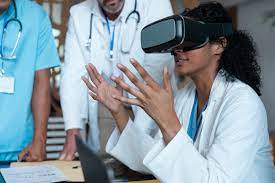
In recent years, advancements in technology have opened up new frontiers in the field of mental health treatment. One of the most promising and innovative developments is the integration of Virtual Reality (VR) into therapy practices. VR therapy is rapidly gaining recognition as a transformative tool for mental health treatment, offering a unique and immersive approach to address a variety of psychological challenges. In this blog post, we will explore the potential of VR in revolutionizing mental health treatment and its impact on therapy.
Understanding VR Therapy:
Virtual Reality therapy involves the use of computer-generated environments to simulate real-world experiences. Users immerse themselves in these virtual environments using VR headsets, which provide a multisensory experience that can mimic different scenarios. In the context of mental health treatment, VR therapy allows therapists to create controlled and tailored environments that facilitate targeted interventions for various psychological conditions.
Applications of VR in Mental Health Treatment:
- Exposure Therapy: VR is particularly effective in exposure therapy, a widely used technique for treating anxiety disorders, phobias, and PTSD. Patients can face and gradually confront their fears in a controlled and safe virtual environment. This method helps desensitize individuals to triggers and reduces anxiety in real-life situations.
- Mindfulness and Relaxation: VR provides an immersive escape from the stresses of daily life, offering guided meditation and relaxation experiences. Patients can explore serene environments, practice mindfulness, and learn relaxation techniques to manage stress, anxiety, and depression.
- Social Skills Training: For individuals with social anxiety or autism spectrum disorders, VR therapy offers a platform to practice and improve social interactions in realistic scenarios. Therapists can create customized social situations to help patients develop and refine their social skills in a controlled setting.
- Pain Management: VR has proven effective in managing chronic pain by diverting patients’ attention from their physical discomfort. Immersive experiences and visual distractions can significantly reduce the perception of pain, offering a non-pharmacological alternative for pain management.
- Cognitive Rehabilitation: VR therapy is valuable in cognitive rehabilitation for conditions such as traumatic brain injuries and cognitive impairments. Customized exercises challenge and stimulate cognitive functions, aiding in the recovery process.
Benefits of VR Therapy:
- Enhanced Engagement: Traditional therapy methods may sometimes face challenges in engaging patients. VR therapy, with its immersive nature, captivates individuals and keeps them focused on the therapeutic process.
- Customization and Control: Therapists can tailor virtual environments to suit the specific needs of each patient. This level of customization allows for targeted interventions that address individualized treatment goals.
- Safe and Controlled Exposure: VR provides a safe space for exposure therapy, allowing patients to confront their fears in a controlled setting. This controlled exposure can lead to more effective and lasting outcomes.
- Remote Accessibility: VR therapy can be conducted remotely, overcoming geographical barriers and increasing accessibility to mental health care. This is especially beneficial for individuals in remote areas or those with physical limitations.
Challenges and Future Directions:
While VR therapy holds immense promise, challenges such as the cost of VR equipment, ethical considerations, and the need for further research to establish efficacy still exist. However, as technology continues to advance, these challenges are likely to be addressed, opening up new possibilities for the integration of VR into mainstream mental health treatment.
Conclusion:
Virtual Reality therapy represents a paradigm shift in the field of mental health treatment. By combining the power of immersive experiences with therapeutic interventions, VR therapy has the potential to revolutionize the way we approach and address various psychological conditions. As research and development in this field continue, VR therapy is poised to become an integral part of mental health care, offering new hope and possibilities for individuals on their journey to mental well-being.