
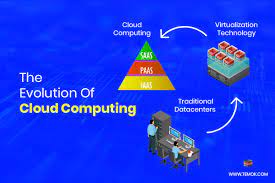
In the fast-paced world of technology, cloud computing has emerged as a transformative force, reshaping the way businesses operate and individuals access information. Over the years, cloud computing has evolved significantly, adapting to the changing needs of users and businesses alike. This blog post delves into the evolution of cloud computing, exploring the trends and innovations that have shaped this revolutionary technology.
- The Early Days of Cloud Computing:
The concept of cloud computing dates back to the 1960s, with the development of time-sharing systems. However, it wasn’t until the 2000s that the term “cloud computing” gained popularity. Early cloud services primarily focused on providing virtualized computing resources, such as storage and processing power, over the internet.
- Rise of Public and Private Clouds:
The first major shift in cloud computing came with the distinction between public and private clouds. Public clouds, like Amazon Web Services (AWS), Microsoft Azure, and Google Cloud Platform, offered shared resources to the general public. On the other hand, private clouds were developed for specific organizations, providing more control over data and security.
- The Hybrid Cloud Model:
As businesses sought a balance between cost efficiency and data security, the hybrid cloud model emerged. This approach combines elements of both public and private clouds, allowing seamless data transfer and workload portability. The hybrid model provides flexibility, scalability, and enhanced security, catering to diverse business needs.
- Serverless Computing:
One of the latest trends in cloud computing is serverless computing, where developers can focus on writing code without worrying about managing servers. Serverless platforms, such as AWS Lambda and Azure Functions, enable automatic scaling and reduced infrastructure management overhead, fostering faster development cycles and cost optimization.
- Edge Computing:
With the rise of Internet of Things (IoT) devices, edge computing has gained prominence. Edge computing involves processing data closer to the source rather than relying solely on centralized cloud servers. This minimizes latency and enhances real-time processing, making it ideal for applications like autonomous vehicles, smart cities, and augmented reality.
- Artificial Intelligence (AI) and Machine Learning (ML) in the Cloud:
Cloud computing has become the backbone for AI and ML applications, providing the necessary infrastructure and resources for training and deploying models. Cloud providers offer specialized services, like AWS SageMaker and Google AI Platform, making it easier for businesses to harness the power of AI without extensive expertise.
- Blockchain Integration:
Blockchain technology is increasingly being integrated into cloud platforms to enhance security, transparency, and trust. By decentralizing data storage and implementing cryptographic techniques, blockchain strengthens the integrity of cloud-based systems, particularly in industries such as finance, healthcare, and supply chain management.
- Sustainability and Green Cloud Computing:
As environmental concerns become more prominent, cloud providers are actively working towards sustainable practices. Green cloud computing focuses on reducing carbon footprints through energy-efficient data centers, renewable energy sources, and eco-friendly infrastructure. This trend aligns cloud computing with global sustainability goals.
Conclusion:
The evolution of cloud computing has been a remarkable journey, marked by continuous innovation and adaptation to technological advancements. From the early days of virtualization to the current era of serverless computing and AI integration, cloud technology has transformed the way businesses operate and individuals access information. As we move forward, it’s exciting to anticipate how emerging trends and innovations will further shape the landscape of cloud computing, driving efficiency, scalability, and sustainability for the future.