
In the ever-evolving landscape of technology, a new paradigm has emerged, reshaping the way we process and analyze data. Edge computing, a concept gaining momentum in recent years, has ushered in a transformative era in the world of information technology. This decentralized computing approach promises to revolutionize the way we interact with data, offering faster processing, reduced latency, and enhanced efficiency. In this blog post, we will delve into the rise of edge computing and explore its far-reaching implications across various industries.
Understanding Edge Computing:
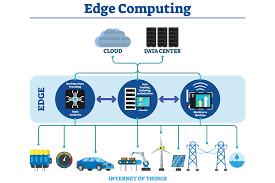
Traditional computing models often involve sending data to centralized cloud servers for processing and analysis. However, with the proliferation of Internet of Things (IoT) devices and the increasing demand for real-time data processing, this centralized approach has encountered limitations, particularly in terms of latency and bandwidth. Edge computing addresses these challenges by bringing computation closer to the source of data generation.
At its core, edge computing involves processing data near the edge of the network, at or near the data source, rather than relying solely on distant cloud servers. This proximity results in reduced latency, faster response times, and more efficient use of network resources. Edge devices, such as routers, gateways, and IoT devices, play a pivotal role in this distributed computing architecture.
Implications for Various Industries:
- IoT and Smart Cities:
- Edge computing is a game-changer for IoT devices, enabling real-time processing of data generated by sensors and connected devices. This is particularly crucial for the development of smart cities, where rapid decision-making is essential for efficient urban management.
- Healthcare:
- In healthcare, timely data processing is critical for patient monitoring, diagnostics, and treatment. Edge computing facilitates the analysis of health data at the point of care, leading to quicker and more accurate medical interventions.
- Manufacturing and Industry 4.0:
- The manufacturing sector benefits from edge computing by enabling predictive maintenance, quality control, and process optimization. This results in improved operational efficiency and reduced downtime.
- Autonomous Vehicles:
- Edge computing is indispensable for autonomous vehicles, where split-second decision-making is crucial for safety. Processing data locally enhances the responsiveness of these vehicles and reduces dependence on centralized cloud services.
- Retail:
- In the retail sector, edge computing supports personalized customer experiences, inventory management, and supply chain optimization. It enables retailers to analyze customer data in real-time, offering targeted promotions and improving overall customer satisfaction.
Challenges and Considerations:
While edge computing presents numerous benefits, it also comes with its set of challenges. Security concerns, standardization issues, and the complexity of managing distributed systems are among the key considerations that need to be addressed. Additionally, the integration of edge computing into existing infrastructures requires careful planning and investment.
Conclusion:
The rise of edge computing marks a significant shift in the way we approach data processing and analysis. As industries continue to embrace this decentralized paradigm, the implications for efficiency, speed, and innovation are substantial. While challenges exist, the potential benefits far outweigh the drawbacks, positioning edge computing as a cornerstone of the future of technology. As we navigate this transformative journey, one thing is clear: the edge is where the future of computing unfolds.