
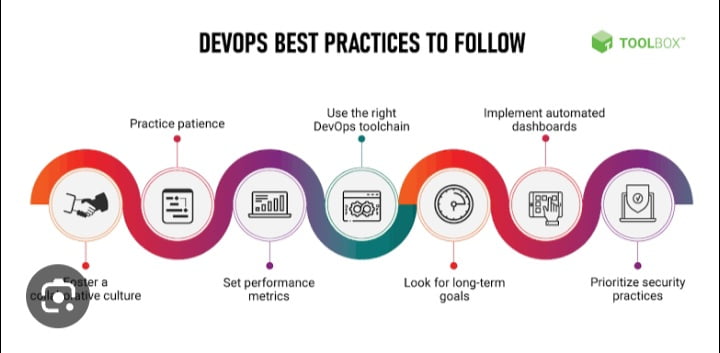
In the dynamic realm of software development, DevOps emerges as a transformative force, bridging the chasm between development and operations to create a seamless, collaborative environment. Let’s embark on a journey into the heart of DevOps, exploring its myriad benefits and delving into the best practices that define its culture.
The DevOps Symphony: Benefits that Resonate
1. Speed of Delivery:
DevOps dismantles the barriers to rapid software delivery. By fostering collaboration and automation, it accelerates the development lifecycle, allowing organizations to release features and updates at a pace unimaginable in traditional development approaches.
2. Continuous Integration and Continuous Delivery (CI/CD):
The mantra of DevOps is continuous integration, where developers’ code seamlessly merges into a shared repository. This, coupled with continuous delivery, ensures a streamlined pipeline, reducing manual interventions and minimizing the time between code changes and their deployment into production.
3. Enhanced Collaboration:
Breaking down silos is at the core of DevOps culture. Developers and operations teams collaborate throughout the entire development process, fostering a sense of shared responsibility. Communication channels open up, and the once disparate teams now function as a cohesive unit, leading to increased efficiency and reduced errors.
4. Automation Alchemy:
DevOps embraces automation to eliminate repetitive tasks and reduce human errors. Automated testing, deployment, and monitoring become the bedrock of a reliable and efficient software delivery pipeline, allowing teams to focus on innovation rather than manual processes.
5. Improved Reliability and Stability:
Through rigorous testing and continuous monitoring, DevOps aims for software that is not only delivered faster but is also more reliable and stable. Automation of testing procedures and deployment processes minimizes the risk of bugs or failures in production, leading to a more robust final product.
6. Scalability and Flexibility:
DevOps practices lay the foundation for scalable and flexible infrastructure. With the rise of cloud technologies and infrastructure as code (IaC), organizations can scale resources on-demand, adapting swiftly to changing requirements and ensuring optimal resource utilization.
Best Practices: Nurturing the DevOps Culture
1. Embrace Automation Wholeheartedly:
Automate repetitive tasks, from code building and testing to deployment and monitoring. This not only accelerates the development cycle but also enhances consistency and reliability.
2. Foster Collaborative Cross-Functional Teams:
Break down the traditional silos between development and operations. Encourage shared goals and responsibilities, creating cross-functional teams that collectively own the end-to-end development process.
3. Prioritize Continuous Integration and Delivery:
Establish a robust CI/CD pipeline to ensure that code changes are regularly and reliably pushed to production. This promotes faster and more consistent releases, reducing the risk of integration issues.
4. Implement Infrastructure as Code (IaC):
Treat infrastructure as code to enable version-controlled, repeatable, and scalable deployments. This not only facilitates better collaboration but also ensures that infrastructure changes are tracked and managed systematically.
5. Emphasize Continuous Monitoring and Feedback:
Implement comprehensive monitoring throughout the software delivery lifecycle. Continuous feedback loops enable teams to identify and address issues promptly, enhancing the overall quality and reliability of the software.
6. Cultivate a Culture of Continuous Improvement:
Encourage a mindset of continuous learning and improvement. Regularly assess processes, gather feedback, and adapt practices to enhance efficiency, quality, and collaboration within the DevOps ecosystem.
In the grand tapestry of software development, DevOps emerges as the artisan, weaving collaboration, automation, and continuous improvement into the very fabric of the development process. It’s not just a set of practices; it’s a culture that propels organizations into a future where software delivery is not a challenge but a harmonious symphony of innovation and reliability. As organizations continue to embrace the DevOps paradigm, the journey promises not just faster deployments but a transformation in the way software is conceived, developed, and delivered.

