
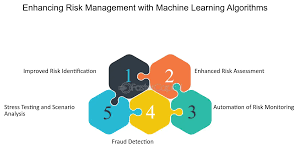
In recent years, the finance industry has undergone a significant transformation with the integration of machine learning (ML) technologies. One area where machine learning is making a substantial impact is in enhancing risk management strategies. Traditional risk management methods are often time-consuming and may lack the agility needed to adapt to the dynamic nature of financial markets. Machine learning, with its ability to analyze vast datasets and identify complex patterns, has emerged as a powerful tool for financial institutions to mitigate risks and make more informed decisions.
- Predictive Analytics for Market Trends:
Machine learning algorithms are adept at analyzing historical market data and identifying patterns that may be imperceptible to human analysts. This capability allows financial institutions to make more accurate predictions about market trends, enabling them to anticipate potential risks. Predictive analytics can be applied to various financial instruments, such as stocks, bonds, and commodities, helping institutions make informed investment decisions and adjust their portfolios accordingly.
- Credit Risk Assessment:
Assessing credit risk is a fundamental aspect of risk management for banks and financial institutions. Machine learning models can significantly enhance the accuracy of credit risk assessments by considering a multitude of factors beyond traditional credit scores. These models analyze diverse data sources, including transaction history, social media behavior, and even non-traditional indicators, to provide a more comprehensive view of an individual or business’s creditworthiness.
- Fraud Detection:
Fraudulent activities pose a substantial risk to financial institutions and can result in significant financial losses. Machine learning algorithms excel in detecting unusual patterns and anomalies in transaction data, allowing for the timely identification of potential fraud. By continuously learning from new data, these models can adapt to evolving fraudulent tactics, providing a proactive defense against unauthorized transactions and other illicit activities.
- Stress Testing and Scenario Analysis:
Machine learning facilitates the automation of stress testing and scenario analysis, enabling financial institutions to assess the resilience of their portfolios under various market conditions. By simulating a range of scenarios, including economic downturns or unexpected market events, ML models assist in identifying potential vulnerabilities in the portfolio and developing risk mitigation strategies.
- Real-time Risk Monitoring:
Traditional risk management methods often involve periodic assessments, which may not be sufficient in rapidly changing financial markets. Machine learning enables real-time risk monitoring by continuously analyzing incoming data and providing instant insights. This real-time capability empowers financial institutions to respond promptly to emerging risks, reducing the likelihood of severe financial consequences.
Machine learning is revolutionizing risk management in the finance industry by providing powerful tools to analyze vast amounts of data and identify patterns that were previously challenging to discern. As financial markets continue to evolve, the integration of machine learning in risk management strategies becomes increasingly crucial. Institutions that embrace these technologies stand to gain a competitive edge by making more informed decisions, reducing exposure to risks, and ultimately ensuring a more robust and resilient financial ecosystem. The future of finance is undoubtedly intertwined with the continued advancement and integration of machine learning in risk management practices.