
Unmasking the Illusion: A Guide to Spotting Fake News and Unleashing the Power of Truth.
In today’s digital age, the spread of misinformation has reached unprecedented heights. Fake news has become a potent weapon that can manipulate public opinion, sow discord, and undermine the fabric of society. But fear not, as we embark on a journey to unravel the secrets behind spotting and debunking fake news. By equipping ourselves with the tools of critical thinking, skepticism, and verification, we can fortify our minds against this pervasive threat. This article aims to enlighten readers on the telltale signs of fake news, demonstrate the methods used to verify content, and shed light on the websites notorious for disseminating fake news.

Unmasking the Deception: Spotting Fake News
Fake news often disguises itself as legitimate journalism, making it challenging to differentiate fact from fiction. However, there are several red flags that can help us identify its deceptive nature. Firstly, sensational or emotionally charged headlines should raise our skepticism. Sensationalism aims to evoke strong emotional responses rather than provide impartial information. Additionally, fake news tends to lack credible sources, relying on anonymous or unverifiable claims. Pay attention to biased language or the absence of well-known sources in the article.
Another key indicator is the absence of authorship or accountability. Fake news often lacks an identifiable author or provides misleading information about the author’s expertise. Check for bylines and cross-reference the author’s credentials if possible. Furthermore, be wary of clickbait tactics employed by fake news articles, such as promises of exclusive or shocking content without substantive evidence.

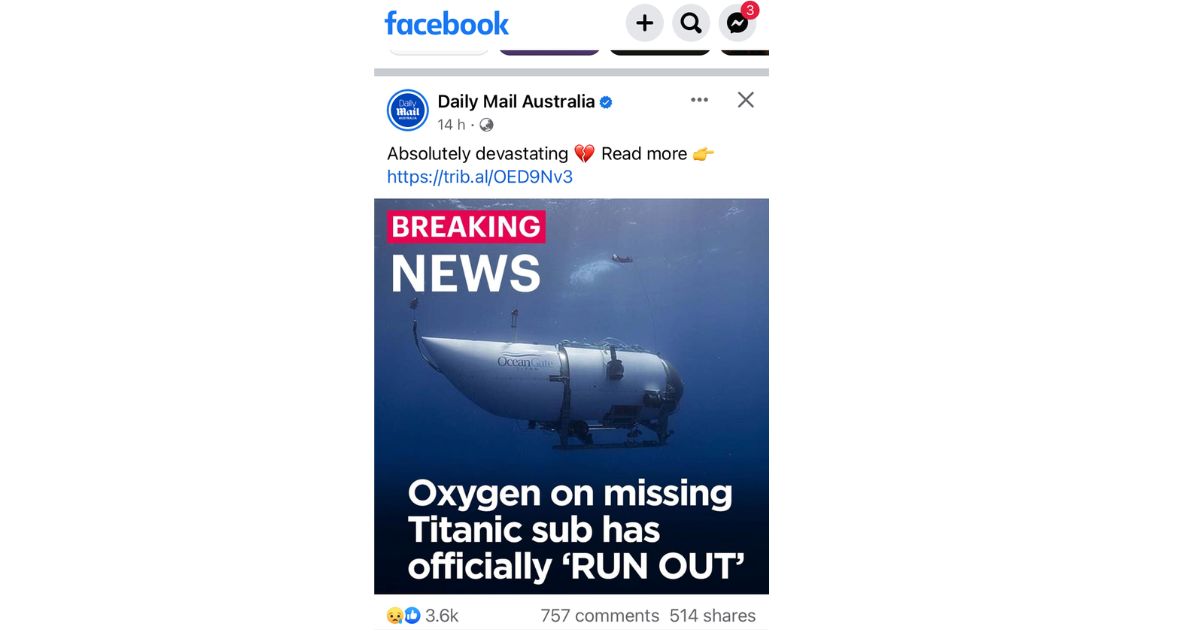
Fake News Example: Title: “Breaking News: Oxygen on Missing Titanic sub has officially RUN OUT”
Despite this not being the case the article appeared on Facebook before actual evidence surfaced in other news streams that the divers found parts of the missing submarine on the ocean floor. On the surface this article demonstrates quiet a believable story and would make you believe that the submarine was in fact intact and the occupants had experienced the slow traumatic demise of running out of oxygen. As we now know from credible news sources that the submarine had in fact imploded and caused instant death to the occupants. Therefore the article is misleading the public and detracting from legitimate conservation efforts. The article presumes a story without any real evidence and this is what is called clickbait. Instead of presenting objective facts, clickbait headlines often appeal to your emotions and curiosity.
Accompanying Visual Deception: Spotting Fake Images
Visuals play a significant role in the spread of misinformation. Fake images can reinforce false narratives or evoke powerful emotions. One example is the infamous image of the Pope, which went viral on social media. In reality, the image was generated by AI and used to deceive and exaggerate the situation. To verify images, use reverse image search tools like Google Images or TinEye to determine their authenticity. Analyse the context, lighting, and consistency of the image with other reliable sources.

Deceptive Voices: Identifying Fake Audio and Video Samples
Advancements in technology have also enabled the creation of fake audio and video samples, further blurring the lines between truth and fiction. For instance, deepfake technology can manipulate audio and video recordings to make it appear as though someone said or did something they never actually did. Verifying audio and video samples is challenging, but critical. Always approach them with skepticism and consider the source’s credibility. Look for inconsistencies in speech patterns, lip-sync accuracy, or unnatural movements that might indicate manipulation. Relying on multiple sources and expert opinions can also help in debunking such deceptive content.

The Web of Deception: Websites Peddling Fake News
Certain websites have gained notoriety for their dissemination of fake news. These platforms often exploit confirmation bias by targeting specific audiences with sensationalized or fabricated stories that align with their preconceived notions. Websites like Infowars, YourNewsWire, and Natural News have faced criticism for their dubious reporting practices. However, it is crucial to approach all sources critically and independently verify the information they provide.
Fake News as a Weapon: Manipulation and Consequences
Fake news serves as a potent weapon in the hands of those who wish to manipulate public opinion or create chaos. It can be employed to shape electoral outcomes, incite violence, or even fuel hatred among communities. The consequences of fake news are far-reaching, eroding trust in institutions, polarising societies, and undermining democracy itself. Recognizing the weaponisation of fake news is vital for safeguarding the integrity of information and maintaining a healthy public discourse.

As the digital landscape continues to evolve, the battle against fake news requires our unwavering dedication to truth and critical thinking. By honing our skills in spotting fake news, verifying content, and identifying deceptive sources, we can collectively resist the pervasive influence of misinformation. Let us remember that the pursuit of truth is a responsibility we all share, and only through our collective efforts can we triumph over the shadows of deception.