

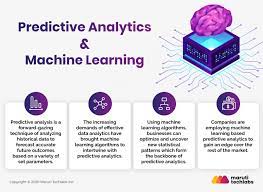
In the rapidly evolving landscape of technology, businesses are increasingly turning to predictive analytics to gain valuable insights into the future. Predictive analytics leverages machine learning algorithms and statistical modeling to analyze historical data and identify patterns that can be used to make informed predictions about future events. This powerful tool is transforming industries, enabling organizations to anticipate trends, optimize decision-making, and stay ahead of the competition.
Understanding Predictive Analytics
Predictive analytics is a branch of advanced analytics that uses historical data to forecast future outcomes. It involves the application of various techniques, including statistical algorithms, machine learning, and data mining, to analyze patterns and relationships within data sets. Unlike descriptive analytics, which focuses on understanding past events, predictive analytics is forward-looking, providing organizations with actionable insights to make informed decisions.
The Role of Machine Learning
Machine learning plays a crucial role in predictive analytics by automating the process of model building. These algorithms can identify complex patterns and relationships within vast datasets, adapting and improving over time as they are exposed to more information. By harnessing the power of machine learning, predictive analytics becomes a dynamic and continuously evolving tool, capable of handling large volumes of data and generating accurate predictions.
Applications Across Industries
- Finance:
- Predicting stock market trends and investment opportunities.
- Assessing credit risk and detecting fraudulent transactions.
- Healthcare:
- Forecasting disease outbreaks and patient outcomes.
- Optimizing treatment plans and resource allocation.
- Retail:
- Anticipating customer preferences and demand.
- Optimizing inventory management and pricing strategies.
- Marketing:
- Personalizing marketing campaigns based on customer behavior.
- Forecasting sales and identifying high-value customer segments.
- Manufacturing:
- Predicting equipment failures and maintenance needs.
- Optimizing production schedules for efficiency.
Challenges and Considerations
While predictive analytics offers immense potential, it comes with its set of challenges. Some of the key considerations include:
- Data Quality:
- The accuracy of predictions relies heavily on the quality of historical data. Inaccuracies or biases in the data can lead to flawed predictions.
- Interpretability:
- Machine learning models, particularly complex ones like neural networks, can be challenging to interpret. Understanding the rationale behind predictions is crucial for user trust.
- Privacy Concerns:
- Predictive analytics often involves the use of personal data, raising concerns about privacy and ethical considerations. Organizations must prioritize data security and compliance with regulations.
- Continuous Model Evaluation:
- Models need to be regularly evaluated and updated to ensure they remain accurate and relevant. This requires ongoing monitoring and adaptation to changing circumstances.
Conclusion
Predictive analytics, powered by machine learning, is revolutionizing the way businesses operate by providing a glimpse into the future. From financial markets to healthcare and beyond, organizations are leveraging this technology to make data-driven decisions and gain a competitive edge. As technology continues to advance, the applications of predictive analytics are likely to expand, offering new possibilities and reshaping the way we approach decision-making in the years to come.