
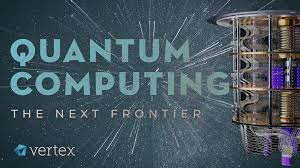
In the ever-evolving landscape of information technology, quantum computing stands out as a revolutionary and transformative force. While classical computers have been instrumental in shaping the digital age, the limitations they face in solving complex problems have given rise to the need for a new paradigm. Quantum computing, with its ability to harness the principles of quantum mechanics, promises to revolutionize computation and propel us into a new era of possibilities. In this blog post, we will explore the fundamentals of quantum computing and its potential implications for the future of IT.
The Quantum Advantage:
At the heart of quantum computing lies the principle of superposition, where quantum bits or qubits can exist in multiple states simultaneously. This unique property enables quantum computers to process and analyze vast amounts of information in parallel, providing a potential exponential speedup compared to classical computers for certain types of calculations.
Another key principle is entanglement, the phenomenon where qubits become interconnected and the state of one qubit instantaneously influences the state of another, regardless of the distance between them. This interconnectedness allows for the creation of quantum systems that can perform complex computations with a level of efficiency and sophistication previously deemed impossible.
Applications of Quantum Computing:
Quantum computing is poised to revolutionize various industries and fields, from cryptography and finance to healthcare and materials science. Some potential applications include:
- Cryptography: Quantum computers have the potential to break widely used cryptographic algorithms, such as RSA, which rely on the difficulty of factoring large numbers. On the flip side, quantum cryptography offers the possibility of ultra-secure communication through the use of quantum key distribution.
- Optimization Problems: Quantum computers excel at solving optimization problems, ranging from logistical challenges in supply chain management to optimizing complex systems like traffic flow and energy distribution.
- Drug Discovery: Quantum computers can simulate molecular and chemical interactions with unprecedented precision, accelerating the drug discovery process and leading to the development of new pharmaceuticals.
- Machine Learning: Quantum computing can enhance machine learning algorithms, providing a significant speedup in training and inference processes, ultimately leading to more powerful AI models.
Challenges and Progress:
While the potential of quantum computing is vast, there are significant challenges to overcome. Building and maintaining stable qubits, error correction, and developing scalable quantum processors are among the hurdles researchers are actively working to address. Progress is being made, and companies and research institutions worldwide are investing in the development of quantum hardware and algorithms.
Conclusion:
As we stand on the brink of a new era in information technology, quantum computing holds the promise of unlocking unprecedented computational power. The potential applications are vast, ranging from solving complex problems that are currently beyond the reach of classical computers to transforming industries and advancing scientific research. While challenges persist, the ongoing research and development in quantum computing herald a future where the boundaries of what is computationally possible are pushed to new frontiers. As we embark on this quantum journey, the IT landscape is poised for a transformation that could reshape the way we approach and solve problems in the digital age.